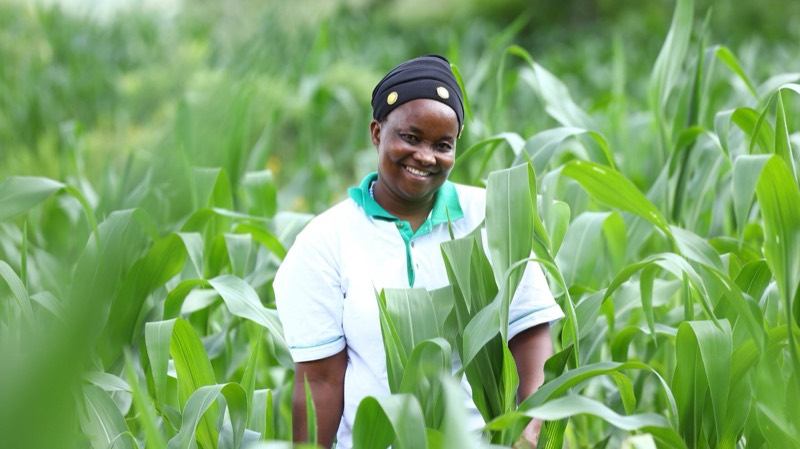
Goal: Improving food security, community and ecosystem resilience through adoption of Regenerative Agriculture.
The project works with 10,000 smallholder farmers and 50,000 indirect beneficiaries in Makueni County, engaging 100 VBAs (60% women, 30% youth) and 50 value chain actors and collaborators.
CGA is implementing the Strengthening Regenerative Agriculture in Kenya (STRAK) project in Kitui, Embu, Makueni, and Tharaka Nithi Counties.
Makueni County with a population of 987,653 (2019 National Census) is predominantly a semi-arid agro-ecological zone and faces chronic water shortages arising from erratic rainfall seasons and perennial droughts. Smallholder farmers face several challenges including adverse effects of climate change, land degradation, declining soil fertility, limited access to extension services, and weak input and output market linkages.
The effects of climate change at the smallholder level has resulted in fragile semi-arid agro-ecological zones. It is important that smallholder farmers are empowered to change their practices and adopt new agricultural technologies that not only safeguard the natural ecosystems but also their household incomes and economies. As such, a key part of smallholder agricultural transformation calls for the adoption of agro-ecological farming technologies and practices that enable smallholder farmers to adapt to climate change and variability, and preserve their natural capital.
Through the training of 100 VBAs each with 100 farmers, the regenerative agriculture project will enhance the resilience of 10,000 farmers in Makueni County through regenerative agricultural practices. These practices lead to healthy soils, functioning ecosystems capable of producing nutritious food, maintaining or increasing yields while simultaneously improving, rather than degrading land, and ultimately leading to productive, profitable farms and healthy communities and economies.
The range of regenerative practices and technologies envisioned in the proposed interventions based on the Makueni context include intercropping cereals (maize and sorghum) with legumes (cowpeas, green grams, and pigeon peas), which improves soil health and reduces pests and diseases. These practices are a key part of integrated soil fertility management — a key response to soil degradation and nutrient depletion in agricultural soils.
The 100 CGA-trained VBAs will train 10,000 farmers on regenerative agriculture and climate smart agriculture (CSA) technologies. The VBAs will also establish regenerative agriculture technology mother demos for grassroots farmer trainings, leading to organisation of farmer field days, trader fairs and peer-to-peer learning visits.
The use of the VBA model will help to leverage the efforts of the county extension system and increase the number of smallholder farmers accessing and adopting new and improved agricultural practices and technologies. Through B2B platform meetings between farmer group representatives and other value chain actors, the VBAs will aggregate demand for agricultural inputs and services as well as source output markets for farmers, while earning a commission for this service.
CGA's monthly e-newsletter — market prices, agronomy tips, and industry news delivered to your inbox.
Thank you. You'll receive the next Cereal Notebook in your inbox.